There is a simple logic to the way Romanian companies adopt business software. The ERP comes first, because the tax system all but forces you to have one. The WMS comes next, because the warehouse and deliveries leave no room for improvisation. The CRM usually comes last, and not because it matters less, but because the immediate operational pressure is lower. Sales keep going more or less regardless. ANAF, the Romanian tax authority, doesn't ask for returns on quotes that weren't accepted, and goods don't get lost on the shelf because someone forgot a follow-up. In fact, the Next iSolutions portfolio took shape in the same order.
Unfortunately, Romanian universities don't really teach sales, and not every entrepreneur is a business school graduate, so many have probably never heard of CRM (customer relationship management) systems.
The problem is that sales are the engine of any business. If sales stall, everything stalls: there is nothing to report, nothing moving through the warehouse, no cash coming in. A CRM system is not a luxury for corporations. It is the tool that turns sales from an activity that depends on key people into a measurable, repeatable process.
Let's look together at 10 activities where the difference a CRM system makes is immediately visible.
Centralizing all customer data
In a company without a CRM, customer information lives in salespeople's heads, in Excel files, in emails and in paper planners. With 5 customers, that works. With 50, it becomes chaos.
A CRM system creates a single database, accessible to the whole team, where every customer has a complete profile: contact details, the decision-maker, the stage of the negotiation, quotes sent, contracts signed. You know who you're talking to, what you promised them and where you stand in the relationship.
Direct impact: Interactions become more personal, human error drops, and time wasted looking for information disappears.
Real-time access to data, from anywhere
Salespeople don't sit in the office. They're in the car, at a customer's site, at the airport. A paper planner or a locally saved file is no help to them in those moments.
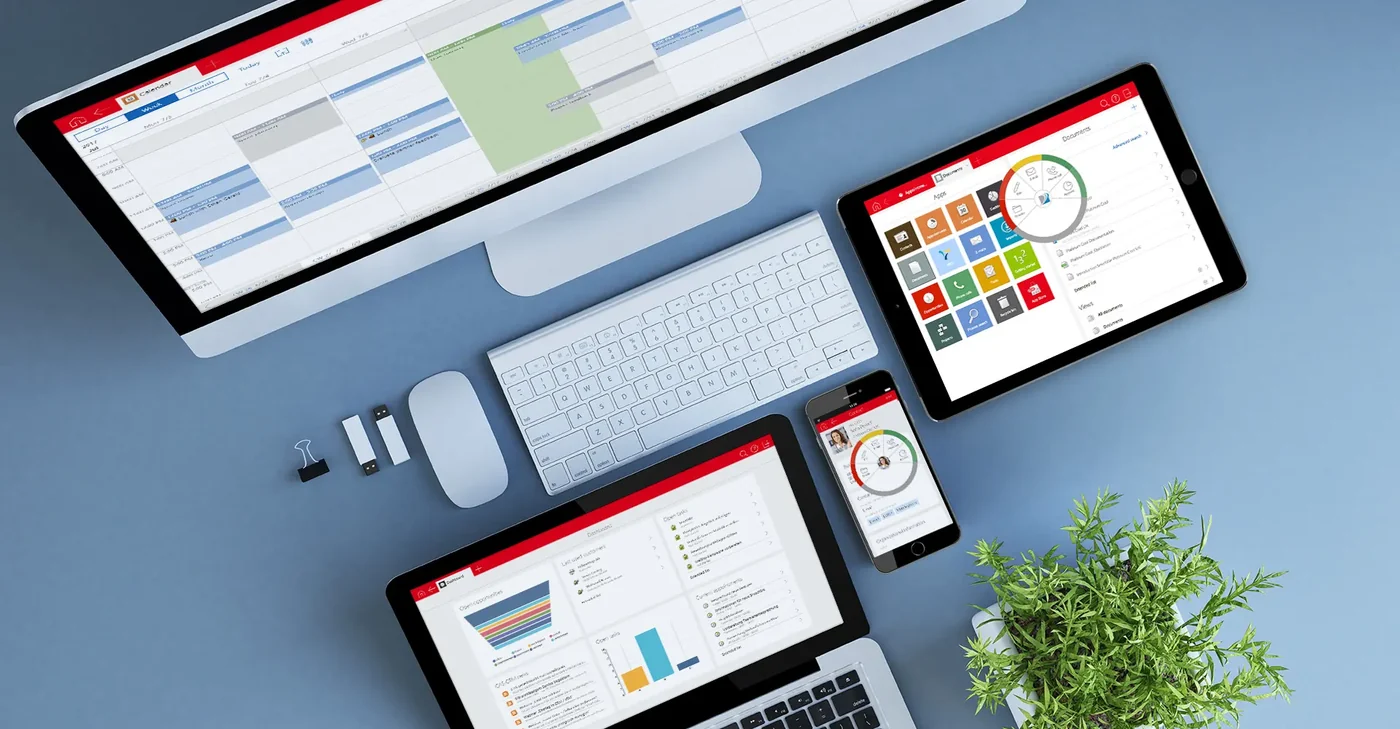
A modern CRM gives full access to customer data from any device: desktop, laptop, tablet or phone. Before a meeting, an agent can review the entire history of the relationship with that customer in 2 minutes.
Direct impact: Decisions are made on the spot, with complete information, not after you get back to the office and "check the system".
Full visibility into the sales process
Without a CRM, the sales manager (or, in many cases, the business owner) knows the state of the pipeline either from memory or after asking each agent individually. And if a company has 4-5 salespeople and a few hundred customers, neither approach scales.
With a CRM, the picture is visible in real time: what activities have taken place, how many opportunities are active, what stage each one is at, what the estimated values are and how likely each is to close. The business owner or manager can step in at the right time, and there are no more surprises at the end of the month.
Direct impact: Managers can act proactively where a negotiation is stalling, rather than reacting after it's lost.
Automating repetitive tasks
Sending a follow-up email after a meeting, setting a reminder to get back in touch, producing a weekly report: all of these take time and, above all, are easy to forget.
A CRM automates these tasks. The system sends notifications, creates tasks automatically and produces reports without manual work. People can focus on selling, not on admin.
Direct impact: The team gains real time for value-adding work and removes the risk of things slipping through the cracks.
Consistent follow-up, with nothing missed
"I forgot to call the customer" is one of the most expensive sentences in sales. An opportunity lost for lack of follow-up doesn't show up in any loss report, but the impact is real.
A CRM solves this problem structurally: either the system automatically reminds the agent that it's time to follow up, or the manager sees directly on the dashboard which accounts haven't had any recent interaction.
Direct impact: Conversion rates go up, not because people get better, but because the process becomes more disciplined.
The complete history of every customer relationship
A customer calls and says they bought from you 2 years ago. Who called them back then? What were they offered? Was there a problem? Without a CRM, the answer depends on someone's memory, or on luck, if the email still exists somewhere.
With a CRM, the whole history is available instantly: calls, meetings, quotes, orders, complaints. The full context of the relationship, one click away.
Direct impact: Interactions become more relevant and more personal: you can offer a discount to a loyal customer or turn down requests for better terms from a customer who systematically pays late.
Onboarding new employees quickly
In a company without a CRM, when a salesperson leaves, part of the relationships with the customers they managed is almost always lost. Their replacement practically starts from scratch.
When all the data is in the CRM, the transition is smooth. The new employee has immediate access to the history of every account, can see where negotiations stopped and can carry on the relationship without any disruption the customer would notice.
Direct impact: Business continuity is ensured, and the new employee becomes productive much faster.
Measuring sales team performance
"You can't improve what you can't measure" holds true in any field, yet it is often ignored in sales. Many managers only know the final results: contracts signed and amounts invoiced. The process behind them remains a black box.
A CRM records everything: the number of calls, meetings held, quotes sent, conversion rate at each stage. You can see not only who sells more, but why, and you can step in where the process gets stuck.
Direct impact: Management coaching becomes concrete, based on data rather than impressions. Team performance improves steadily.
Customer segmentation and personalized campaigns
Not all customers are the same. A customer who buys 3 times a year deserves a different approach from one who bought once, 18 months ago. A CRM lets you segment your portfolio by precise criteria: purchase frequency, average order value, industry, location or buying behavior.
These segments become the basis for marketing and sales campaigns that are far more relevant than a generic newsletter sent to the whole list.
Direct impact: The right messages reach the right people at the right time, which translates directly into higher response and conversion rates.
Collaboration across departments
A sale doesn't end the relationship. A customer signed by the sales team becomes the responsibility of the installation, service and support team. If the two teams don't have access to the same information, the customer will feel it: they'll repeat the same context every time they call, get inconsistent answers and end up frustrated.
A CRM with help-desk features removes these barriers: sales, support and operations work from the same system, with the same data.
Direct impact: The customer experience stays consistent throughout the relationship, not just during the buying phase.
Which CRM system is right for your company?
In the Next iSolutions portfolio you'll find two CRM solutions that are different, yet similar. How so?
- CAS genesisWorld is a very powerful CRM with a classic implementation, tailored to each customer, suited to organizations with complex sales processes.
- SmartWe is a cloud CRM, available as a monthly subscription with no local installation, ideal for teams that want to get started quickly without large infrastructure investments.
Both are developed by our partner CAS Software and share the same intuitive, easy-to-use interface and AI-based features (intelligent virtual assistants).
Contact us for a demo, a presentation or a reference visit. Choosing the right system starts with a conversation about how sales work in your company, not with a list of features.