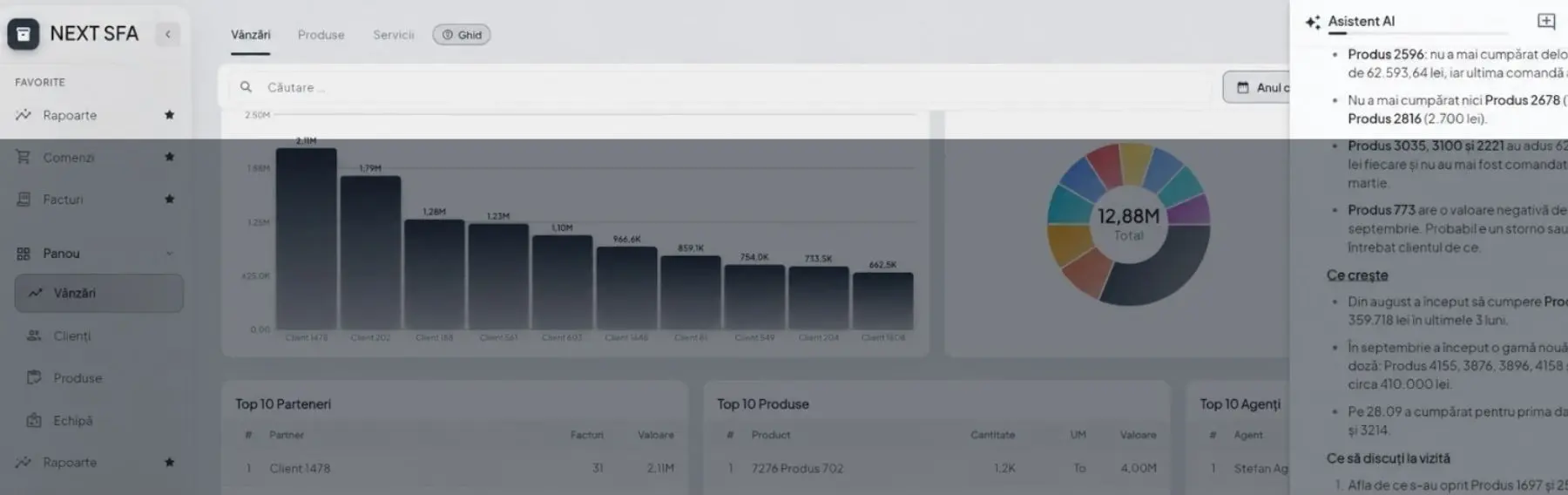

Many companies that sell B2B have both office-based sales departments and teams of field agents: people who physically visit customers, take orders and often even deliver the goods on the spot. It is the classic direct sales model, widespread in FMCG and traditional distribution, and it remains very effective despite its complexity. The problem is not the model itself but the tools the agent works with: most of the time, an order book, a phone and their own memory of what the customer bought last time.
For a sales or distribution agent with dozens of customers in their portfolio and several visits a day, not having data at hand translates directly into lost sales. Without real stock and prices, the agent calls the office for every detail. Without the customer's history, they don't know which products the customer has stopped ordering or what payments are still outstanding. Without a dedicated SFA (sales force automation) solution, the order goes on paper and is typed into the system by hand, with all the errors and delays that come with it. The result: wasted time, missed cross-sell opportunities and a customer relationship that depends entirely on how well the agent remembers each customer's details.
What an SFA solution actually is
SFA (sales force automation) is a category of software built for exactly this problem: digitalizing the field agent's work. Instead of a notebook and a phone, the agent has an app (usually mobile, but also available in a browser) to take orders, check real stock and each customer's actual price, follow the balance and order history, get approvals from managers, and receive recommendations on what to propose at the next visit.
The key difference from a "Notes" app or a shared Excel file is integration: an SFA solution is connected directly to the ERP and, where needed, to the WMS. What the agent sees on the phone (stock, price, the commercial policy applied to that customer) is exactly what is in the central system, updated in real time. An order placed in the field goes into the ERP automatically, with no manual re-entry and no risk of the figures getting out of sync.
What it offers in practice
A modern SFA solution usually covers the agent's entire sales cycle, from preparing the visit to delivery:
- Pre-visit brief: the agent walks in already knowing the churn risk, what has dropped from the usual orders and what to propose, instead of improvising on the spot;
- Field ordering with real data: stock and price per customer, promotions applied automatically, no coupon codes and no calls to the office;
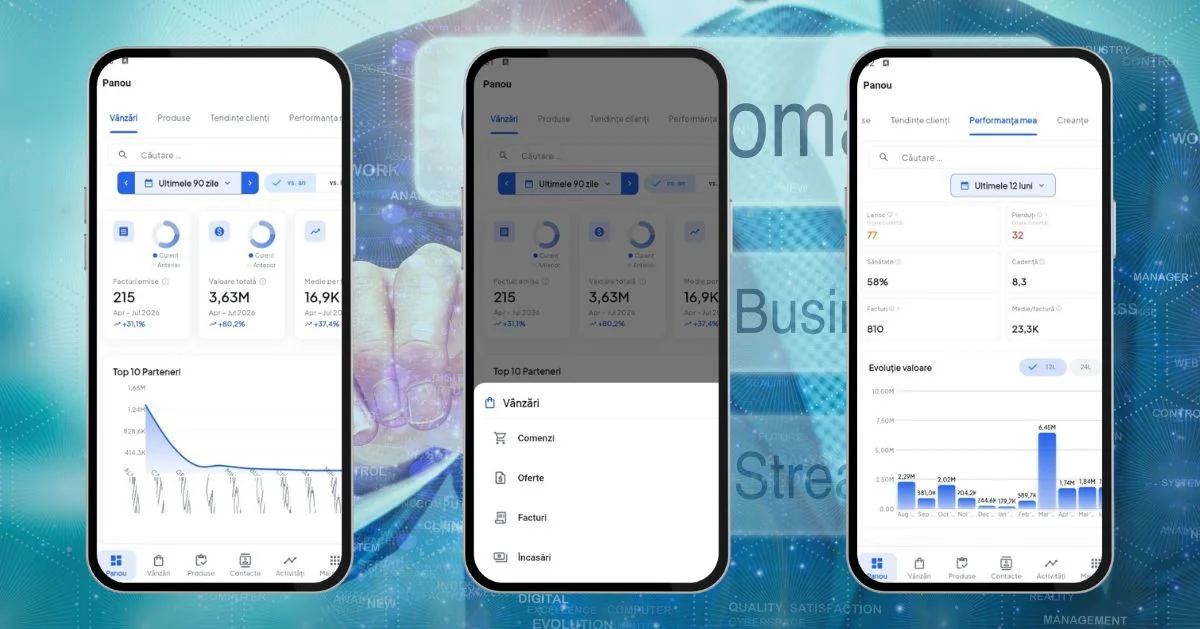
- Commercial policies visible instantly: the customer's price list, active threshold and discount offers, quantity promotions, all directly on the order screen;
- Sales information per product: last order, average monthly quantity, suggested quantity and the price with the promotion already applied;
- On-the-spot collections: amount, payment method and allocation to the customer's open invoices, with the balance updated instantly;
- Routes and visits: daily route planning, synced with the visit schedule;
- Automatic sync with ERP/WMS: an order placed in the field goes straight into the central system, with no manual processing afterwards.
The real gains of an SFA
Beyond the features, what matters to a company is how they translate into sales results:
Real data in the field, in real time. The stock and prices the agent sees are exactly those in the ERP and WMS, which removes after-the-fact confirmations and orders rejected because the goods were no longer there.
Intelligence in the agent's pocket. A risk score calculated automatically for each customer (based on recency, decline, ordering frequency and payments) shows the agent, before the visit, who is about to go inactive and how big the estimated loss is. In practice, the agent no longer waits to spot the decline in a monthly report; the system flags it early, with a suggested action ready to go.
Orders on the spot, no re-entry. Once placed, the order goes automatically to the ERP or WMS: no paper, no double entry, none of the errors that come with manual transcription.
Targets and performance tracked on any dimension. Targets can be set by value, quantity, number of customers, orders or visits, over monthly, quarterly or yearly periods, and agents see their own progress against target in real time, not just at the end of the month.
Cross-sell opportunities identified automatically. For each customer, the system can work out the product categories they don't buy yet but similar customers do, giving the agent a concrete starting point for an additional sale rather than a hunch.
One platform, on any device. Web, Android or iOS: the agent has access to the same data wherever they are, and the company has a single source of truth for all field sales.
What's next?
For companies with field sales teams, an SFA is not a technology fad. It is the tool that turns a sales visit from a routine based on memory and luck into a data-driven process. The agent no longer just collects orders; they multiply them, with the right information at the right moment.
Next iSolutions has offered an established SFA solution for several years, and we have already built a new generation of it, NEXT SFA, natively integrated with the B2B portal we wrote about in a recent article. Both products are now available for beta testing and will be commercially available starting in September.
If you'd like a more detailed presentation of NEXT SFA and NEXT B2B, possibly tailored to your business or even using your own data, contact us at office@nextisolutions.ro