For many companies, implementing an ERP system was the first major step in their digital transformation. More often than not, it was driven by very concrete needs: compliance with legal and tax requirements, reporting to ANAF (the Romanian tax authority) and other authorities, and projects such as SAF-T or e-Factura, which put real pressure on the business community.
So it is no surprise that today there are more companies with a working ERP than companies using a CRM system. And yet, if you see digitalization as a complete process, not just a compliance obligation, one essential question comes up: can you really say you are digitalized if you run your finances and operations perfectly but ignore sales and customer relationships?
Digitalization without a CRM system? An unfinished story
An ERP is the backbone of the company: it manages finance, production, distribution, inventory, purchasing and internal resources. It is essential for control and operational efficiency.
But an ERP is not built to manage commercial relationships, the sales pipeline, the history of customer interactions or the work of sales and marketing teams.
This is where CRM comes in.
A CRM system is not "an extra". It is the piece that completes your digitalization, connecting the financial and operational side with the commercial side. However well your internal processes are optimized, sales remain the key to a successful business. Without sales that are well managed, visible and predictable, operational efficiency does not automatically turn into growth.
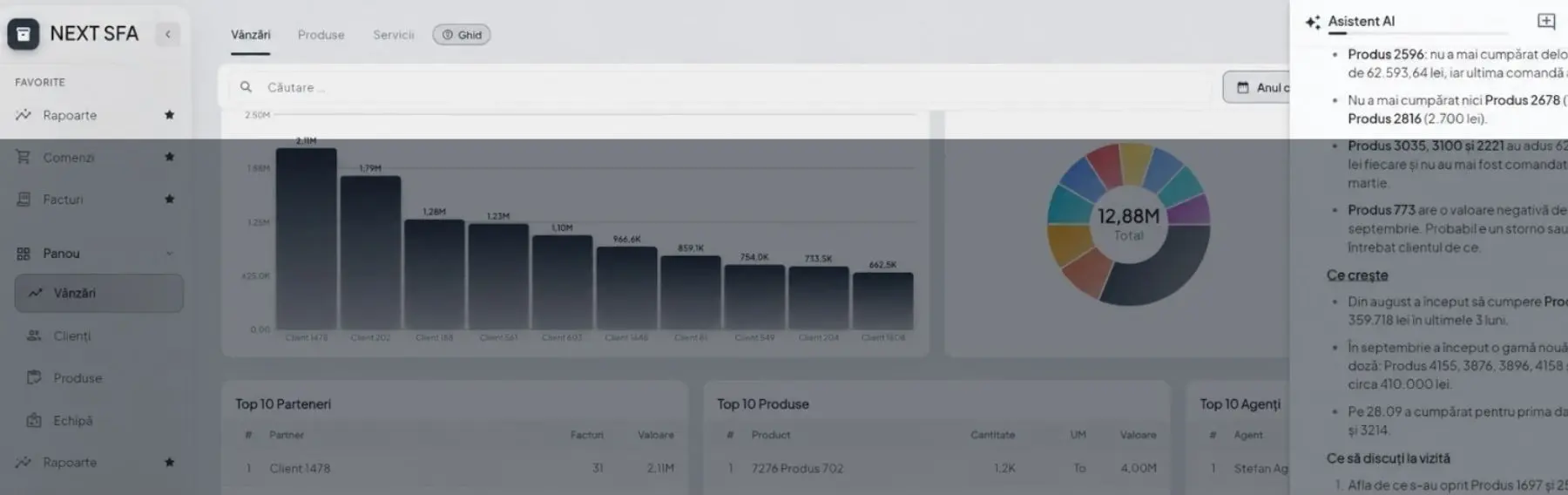
That is also why, in 2024, we became certified partners of CAS Software, the German company that develops the CRM systems CAS genesisWorld and SmartWe. We added these solutions as a natural extension of the NEXT portfolio, which already included the ERP systems WinMENTOR ENTERPRISE and SOFTONE, along with WMS and SFA.
ERP and CRM don't exclude each other. They complement each other
"We have an ERP, do we also need a CRM?" is a common question, especially in companies where sales still run on Excel, emails and personal notebooks. The answer is simple: yes, if you want a complete picture of your business.
The ERP optimizes what happens inside the company.
The CRM manages what happens between the company and its customers.
A good CRM:
- centralizes data on customers and prospects;
- gives visibility into the sales pipeline;
- supports the work of sales, marketing and support teams;
- increases conversion rates and customer retention.
That is why CRM and ERP are complementary technologies, not interchangeable ones. An ERP cannot replace an effective CRM, just as a CRM cannot take over the critical functions of an ERP.
Why ERP–CRM integration is essential
The real value appears when the ERP and the CRM work together. Integration gives management a unified view of the entire business: from leads and quotes to orders, invoicing, delivery and payment collection.
Key benefits of ERP–CRM integration include:
- aligning sales forecasts with production and inventory;
- giving sales teams access to relevant financial information (payments, credit limits);
- eliminating duplicate data and data errors;
- quick access to order and invoice history;
- faster, more consistent commercial processes.
In other words, sales no longer work in isolation; they become an integral part of the company's operational and financial flow.
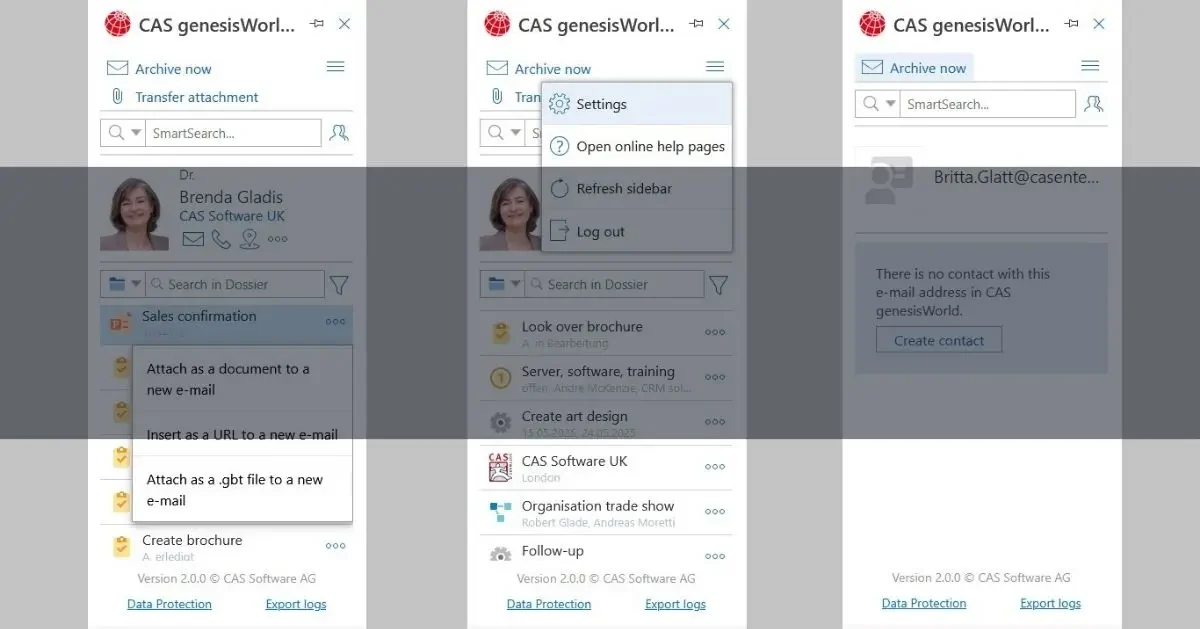
CAS genesisWorld: the CRM that completes your ERP
CAS genesisWorld is designed for exactly this scenario: companies that already have an ERP and want to take digitalization to the next level with a mature, flexible CRM that is easy to integrate. SmartWe, the second CAS solution, is a cloud CRM suited to companies with simpler operations and no customization or integration requirements.
A major advantage of CAS CRM is the OpenSync framework. CAS genesisWorld can be integrated with any ERP solution, and dedicated connectors already exist for the most widely used systems. Since 2024, we have successfully integrated CAS CRM with both SOFTONE and WinMENTOR ENTERPRISE for several clients. So we have real ERP–CRM implementation and integration experience, which lets us deliver coherent projects where financial and operational data is complemented by professional management of your commercial relationships.