
If you run a business or work in sales and marketing, you have certainly heard of CRM (Customer Relationship Management) systems. CRM describes both a company's customer relationship strategy and the technology tools that help manage those relationships. Are customers a business's most important "asset"? Some argue that employees matter more, but nobody denies the role customers and sales play in a company's success.
That's why every company needs to bring together and efficiently manage all its customer interactions, across all channels and throughout the relationship. The goals are, on one hand, to deliver a quality experience and, on the other, to speed up sales and generate profit.
CRM software (and here we mean the technology) meets these needs by centralizing all customer interactions in a single platform, helping companies reach the goals above.
What exactly is a CRM system, and what does it do?
A CRM system lets a company manage and automate its interactions with current and potential customers. The main purpose of CRM solutions is to improve business relationships by keeping in constant touch with customers, streamlining internal processes and helping increase profitability. By simplifying the management of contacts, sales and productivity, a CRM optimizes workflows and improves team performance, making the whole business easier to run.
How does it work? First, a CRM system collects data from various sources and channels, such as the website, email, phone, social media and more, to build a detailed profile of each customer. It can also store customers' personal communication preferences. This data is organized coherently, giving a complete picture of your relationships with people and companies, so that sales teams, support teams and managers can better understand how those relationships evolve over time.
But a CRM doesn't only help you develop relationships with customers. It also covers service users, colleagues, suppliers and partners. The system supports finding new customers, providing support and delivering additional services as these relationships grow, ensuring a personalized, continuous experience that leads to greater customer loyalty, smoother supplier relationships and better cooperation with partners and among employees.
In practice, a CRM system includes the following core features:
Customer data management
- Stores information about customers, including purchase history, preferences and past interactions.
- For example, a software company stores its customers' license purchase history and their update preferences in the CRM, so it can send personalized offers for the products that fit their needs.
Relationship and communication management
- Lets you personalize communication with customers and suppliers by email, messages and other channels, and keeps a history of these interactions.
- A marketing agency can automatically send personalized newsletters based on a customer's past behavior on the website. The CRM keeps a complete history of every communication, so the agency can better understand each customer's needs.
Performance analysis and reporting
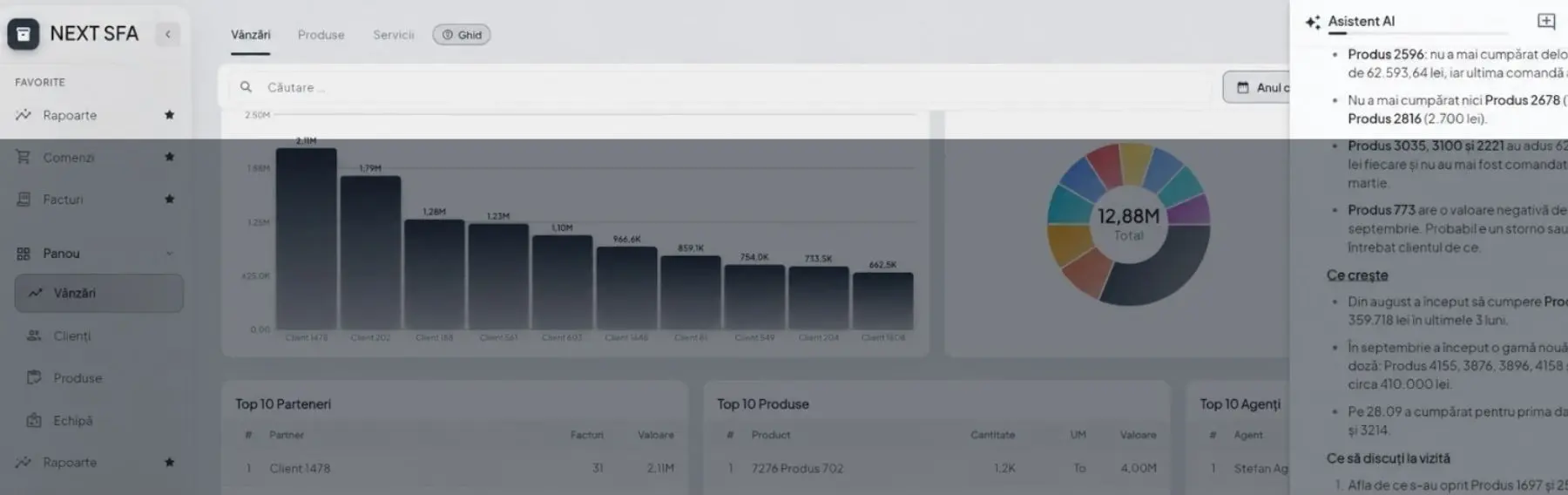
- Provides detailed reports on sales performance, sales team efficiency and customer behavior, helping companies make informed decisions.
- A sales manager uses a CRM report to see which products sold best over the last three months and which sales reps closed the most deals, making it easier to adjust sales strategies and allocate resources.
How does a CRM system help you in sales, marketing and support?
In sales, a CRM helps you track leads through every stage of the sales process, from first contact to after-sales support, making sure your sales team doesn't miss any opportunity. For example, the CRM can automatically send follow-up emails, schedule meetings and remind sales reps of upcoming tasks, reducing manual work and improving efficiency.
In marketing, as mentioned, a CRM lets you create personalized campaigns based on customer data, such as sending personalized offers based on previous purchases or browsing history. It also enables segmentation, grouping customers by behavior or demographics so you can send them targeted messages. In addition, CRM analytics give you valuable insight into campaign performance and sales trends, so teams can adjust their strategies and improve results over time.
A CRM system also significantly improves customer support by centralizing all customer interactions, so support teams can deliver faster, more effective solutions. For example, the CRM stores a detailed customer history, including past issues, purchase history and previous communications, so support agents can quickly access the relevant information and solve problems without asking repetitive questions. The CRM can also automatically assign support tickets to the right team members based on the issue or the customer profile, making the workflow more efficient.
CRM systems often include tools for tracking response times and customer satisfaction, which can help teams identify areas that need improvement. Automatic follow-up reminders make sure open issues are resolved quickly. The system can also send personalized messages or solutions to customers based on their specific needs, giving them a more personal and pleasant experience.
Options for buying a CRM system: on-premises or cloud?
A company can choose between an on-premises CRM and a cloud CRM, each with pros and cons depending on the company's specific needs.
An on-premises CRM system is installed and managed on the company's own servers. One of the main advantages of this kind of solution is full control over data and infrastructure, which can matter for companies with strict data security regulations.
In this setup, in-house IT staff can also customize and maintain the system to fit the organization's specific needs. However, this option involves high upfront costs for hardware, software licenses and the required infrastructure, as well as ongoing maintenance and update costs.
The second option, a cloud-based CRM, is hosted on external servers and accessed over the internet, so organizations don't need to invest in their own infrastructure. Cloud solutions are also cheaper because they involve predictable monthly or annual costs, with no large upfront investment.
Another major advantage of cloud CRM is scalability: resources can be adjusted quickly as business needs change and the company grows. With automatic updates and fast implementation, cloud CRM offers greater flexibility. Even so, some organizations avoid cloud CRM solutions over concerns about data security and privacy, since the information is stored on external servers.
CRM systems from Next iSolutions
The choice between an on-premises and a cloud CRM system depends on the company's priorities, including the need for control over data, upfront costs and scalability requirements. Most small and medium-sized companies choose cloud solutions for their flexibility and lower costs, while larger organizations with strict security requirements may prefer the on-premises option. The Next iSolutions portfolio has solutions for businesses in both categories.
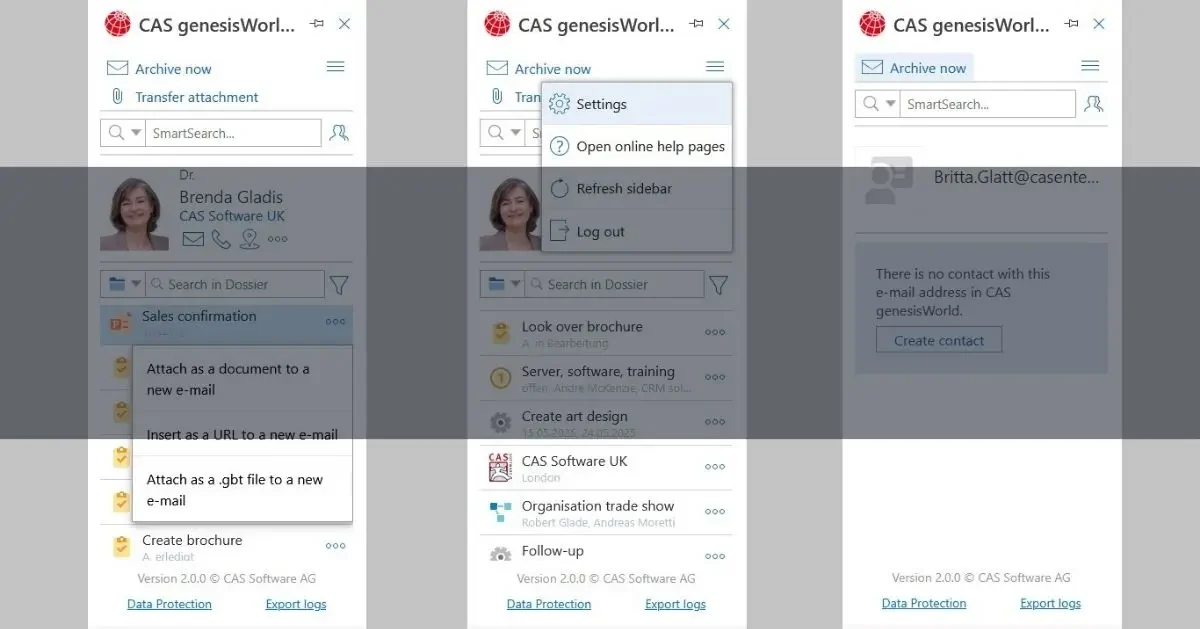
CAS genesisWorld is a CRM/XRM (Customer Relationship Management/Any Relationship Management) system made in Germany and developed by CAS Software, designed for European organizations that prefer an on-premises solution. CAS uses artificial intelligence to optimize relationships with customers, partners and suppliers. It centralizes information from multiple sources and makes it easier to manage sales, marketing and after-sales support by automating workflows. The system includes predictive features to increase deal success, document management, project management and a helpdesk, giving you a complete solution for managing business relationships efficiently.
CAS genesisWorld makes collaboration simpler (including remote work) and gives full transparency through centralized data, access on multiple devices (smartphone, tablet, laptop, smartwatch) and extended mobility features. Users can access information even offline, and security is ensured by an advanced access control system in line with GDPR standards. In addition, the AI assistants built into the platform optimize everyday tasks, and the modular architecture provides the scalability and flexibility to adapt to any type of business.
SmartWe is the cloud version of the CAS genesisWorld CRM system, offering the same features for an affordable monthly subscription with no investment in hardware or licenses. Users can manage leads, communicate directly with customers and customize the apps without any programming knowledge. SmartWe also includes features such as a calendar and automatic data synchronization for fast, efficient access to key data, even on the move.
The solution is easy to use, with an award-winning interface and wizards that guide users through every step of the setup. Available straight from the browser and compatible with any device, SmartWe guarantees high security standards, as it is hosted in high-performance, GDPR-compliant data centers. At competitive prices, starting from €9.99/month/user, SmartWe also integrates with popular apps such as Gmail and Office 365.
Not sure which CRM system is right for your business? Contact us and we'll explore both options together!