Only 7-8% of active companies in Romania make B2B and B2G sales through a website, below the European average, according to the "Digitalization in Europe" report. The figure actually tells a bigger story: while B2C commerce went through automation long ago (shopping carts, online payments, personalized recommendations, everything about the digital experience has become standard), B2B commerce has stayed anchored in phone calls, email, field agents and even orders taken in person at the office.
The gap is no accident. B2C had the pressure of consumers who wanted everything instantly. B2B ran for a long time on personal relationships, individual negotiations and large volumes at relatively thin margins, especially in FMCG and distribution, where operational efficiency matters as much as price. But it is exactly where volumes are high and margins are thin that the lack of automation costs the most.
What a B2B order actually looks like today
In the vast majority of companies, a customer order arrives through one of the classic channels: phone, email or directly through the sales department visiting the customer. All three share the same structural limitation: they depend on a person being available, during their working hours, with the information they have at that moment.
This leads, almost inevitably, to a set of problems familiar to anyone who has worked in sales:
- Time lost taking orders by hand and re-entering them into the system;
- No real-time access to stock, the customer's credit limit or their current balance, which means after-the-fact confirmations, corrections and sometimes orders rejected after the customer thought they had already bought;
- No integration between the sales channel and business systems (ERP, CRM, WMS), which leads to duplicate data and gaps between what is sold and what is actually in stock;
- Errors and delivery delays, caused by manual processing and by information passing from one department to another.
On top of all this comes a less visible but equally real cost: missed opportunities. Customers don't hear about new products, promotions or campaigns because the agent simply doesn't have time to explain how each offer works. And when commercial policies do exist, they are either applied uniformly (the same terms for everyone, regardless of context) or they are not transparent, which gives customers no reason to order more or try new products. The result: a lot of commercial complexity, stock that sits longer than it should, and a customer relationship that depends too much on one person's memory and availability.
What a B2B portal actually changes
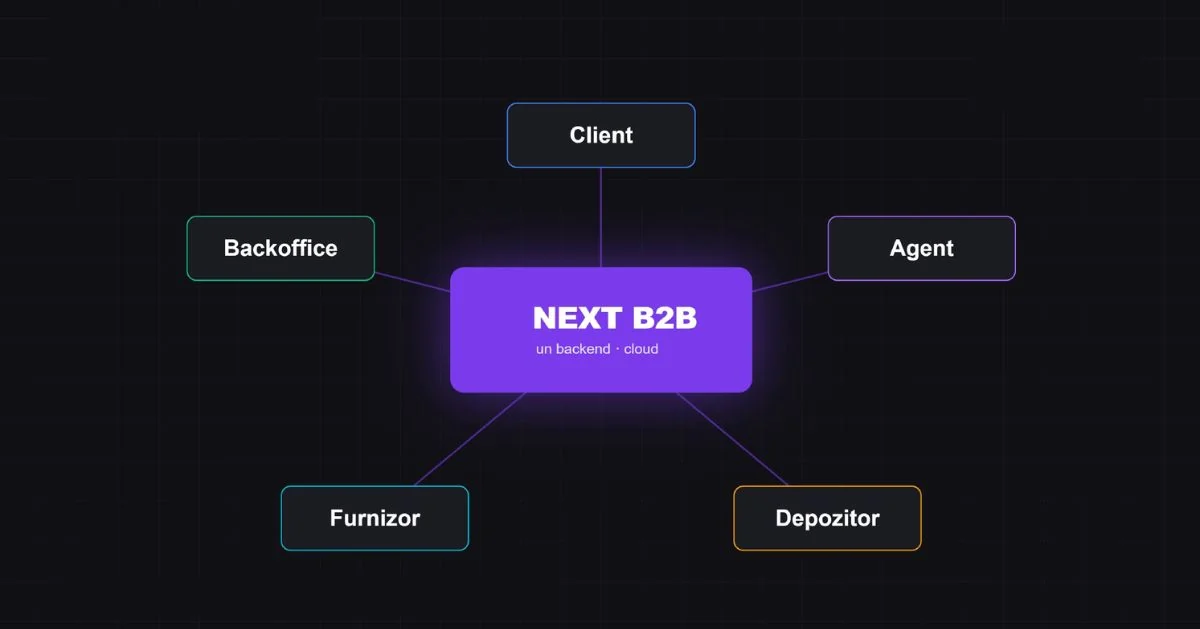
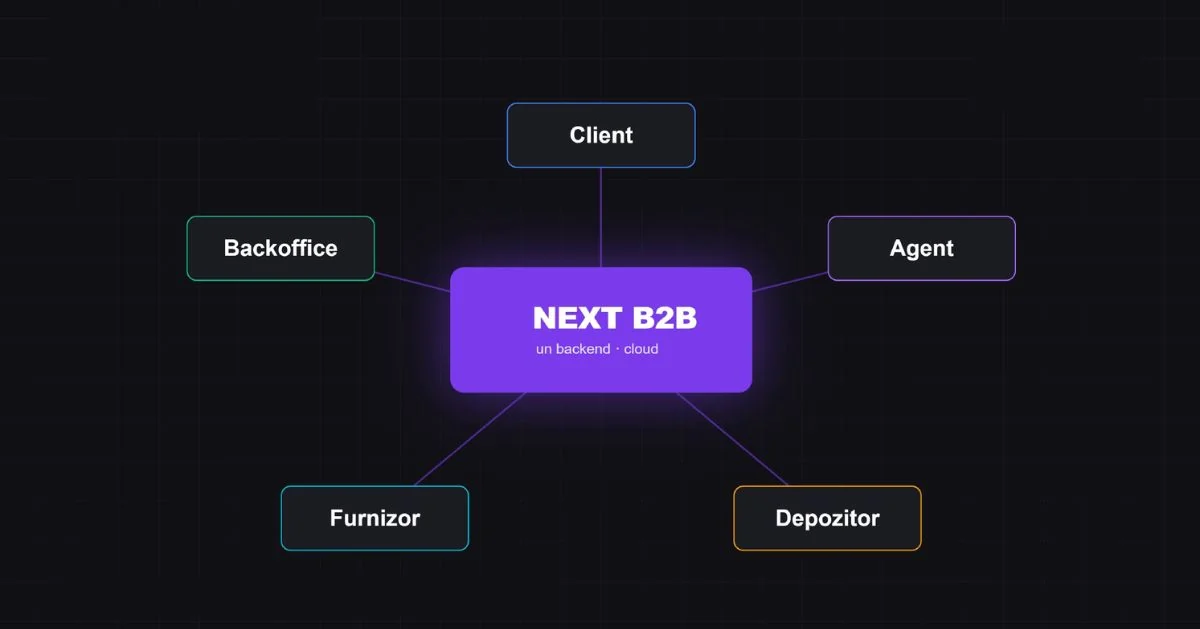
A B2B portal is, in essence, a self-service digital channel offered to business partners (customers, distributors, the sales department) to place orders, see real stock and follow their order history without phone calls or emails. The difference from a regular online store is integration: the portal reads from and writes directly to the ERP, the WMS and, where relevant, marketing automation platforms, which makes it possible to automate the main sales processes:
- Order taking and processing: the order placed by the partner goes straight into the management system, with no manual re-entry;
- Stock and price updates: each customer sees real stock and their own negotiated price, in real time;
- Invoicing: invoices, delivery notes and receipts are generated automatically, based on the actual delivery;
- Sales communication: automatic notifications about order status or about campaigns relevant to each customer;
- Logistics: direct sync with the warehouse, so orders can be prepared quickly.
In practice, the customer orders on their own, at any time, and every order automatically goes through the company's rules (correct price, commercial policy applied, credit limit checked), exactly as if it had been entered by hand, only instantly and without human error.
In B2C (business to consumer), online transactions carry much more weight: in 2024, for example, 73% of internet users in Romania shopped online, according to Magazinul Progresiv magazine.
Beyond orders: the analytics side
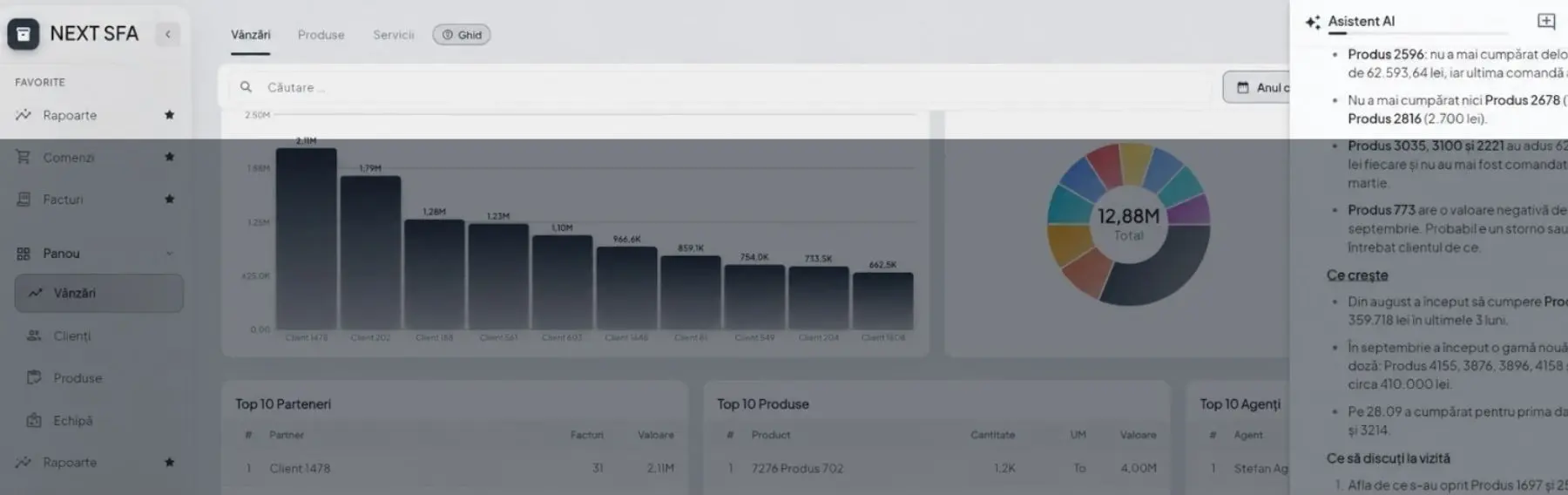
A well-built B2B portal doesn't stop at processing transactions. In the back office, its role is to turn the data it collects into information the sales team can use. In practice, on login, a dashboard can immediately show sales trends, a drill-down into top products and top customers (by year, half-year or any chosen period) and a trend analysis for each customer.
That last part is perhaps the most valuable: automatically identifying customers with a negative trend, those who have gone inactive or who have suddenly cut their order volume compared with previous periods. Instead of a "lost" customer being noticed months later in a sales report, the system flags the drop early, and the sales team can step in with an offer or a conversation before the relationship breaks down completely.
What's next?
Automating B2B commerce doesn't mean getting rid of the sales department or the personal relationship with the customer. It means getting rid of repetitive work and the uncertainty around it, so people can spend their time on what really matters: relationships, loyalty, winning back customers whose orders are declining, more personalized recommendations and so on.
The good news is that, drawing on more than 15 years of experience digitalizing distribution companies and implementing ERP and WMS systems, we have built a self-service B2B ordering portal. The product is called NEXT B2B and is currently available for demos and beta testing, with commercial availability starting in September.
If you'd like a more detailed presentation, possibly tailored to your business or even using your own data, contact us at office@nextisolutions.ro